

TPO, EPDM, and PVC
Commercial roof service and repair.
Leaks on a low-slope roof rarely start where the water shows up inside. We trace the source, fix it to the manufacturer's details, and document the repair with photos so you have a record for your warranty file and your facilities team.


Single-ply seams
Three typical lap sections. These are drawings, not photos of completed roofs.
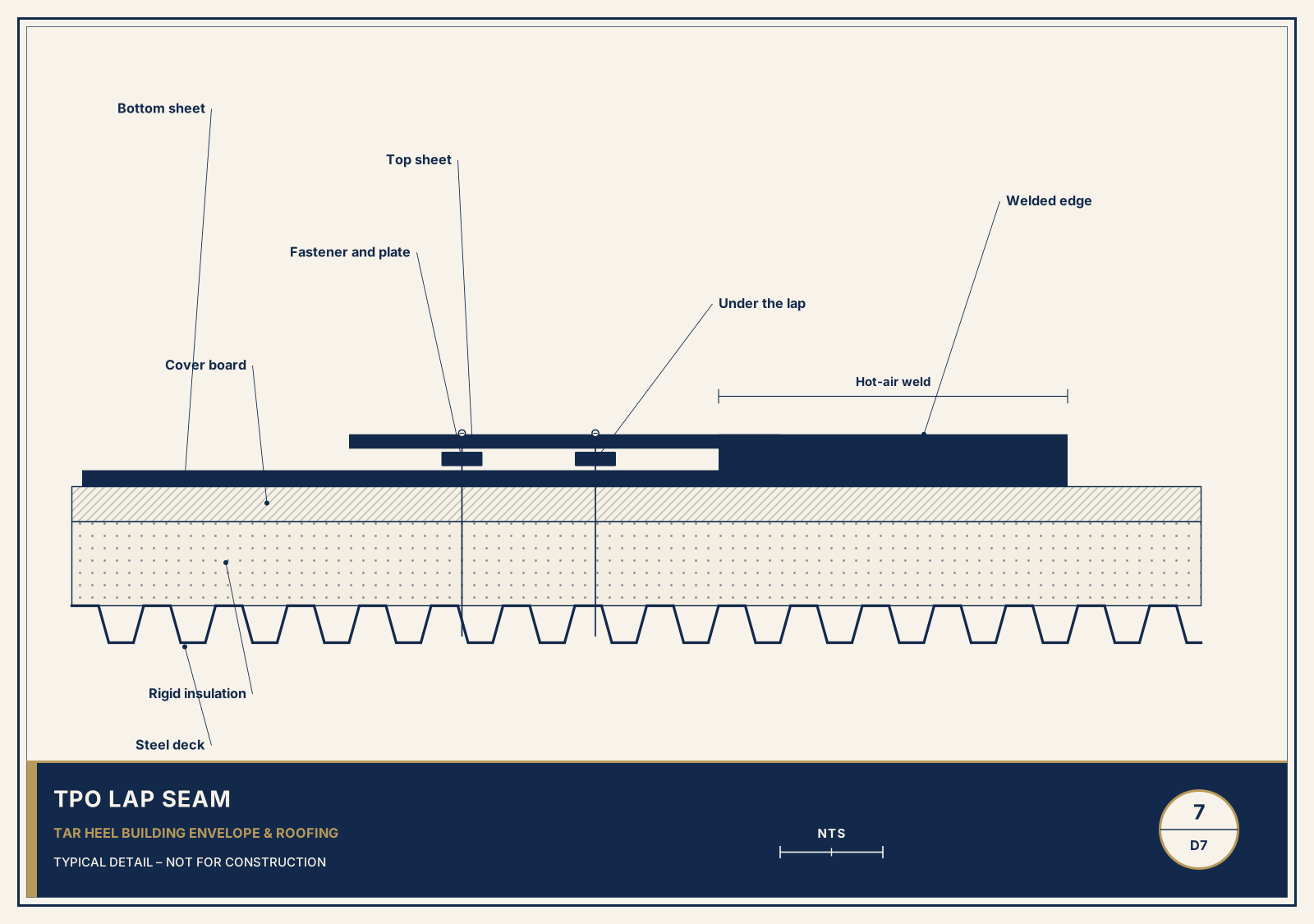
TPO weldHot-air welded seam
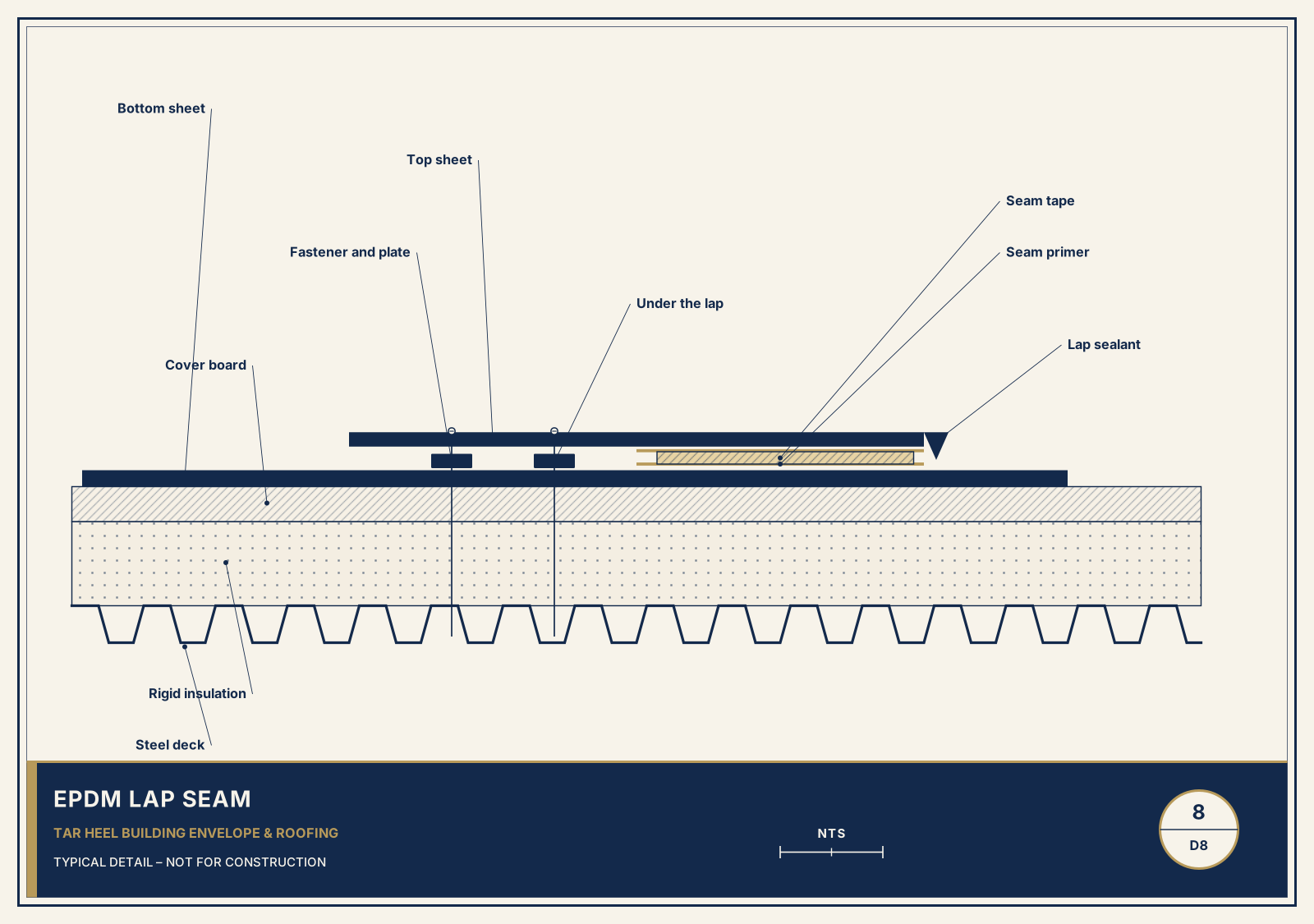
EPDM tapePrimed seam with seam tape
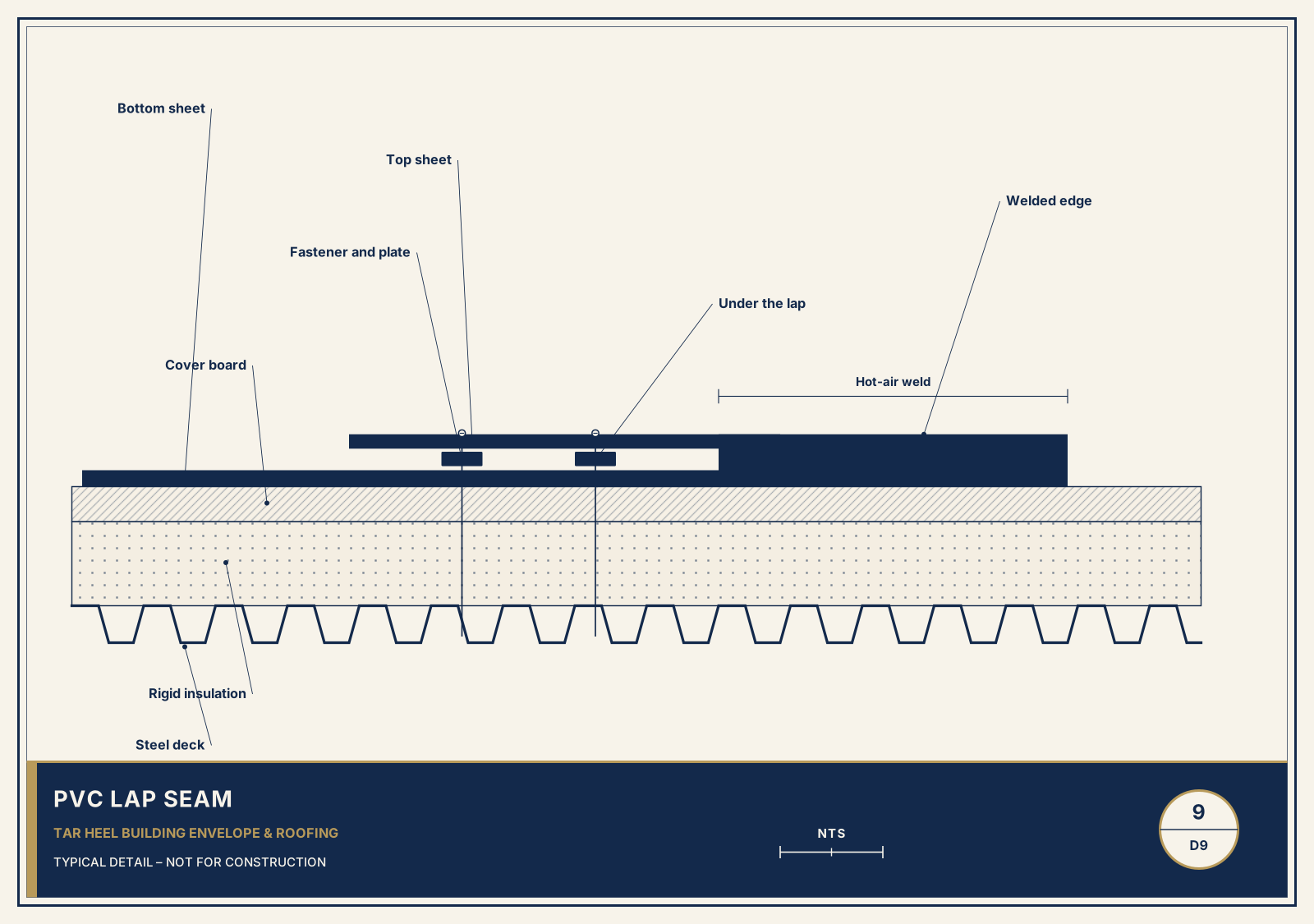
PVC weldHot-air welded seam
Leak or storm damage?
Every call is answered, and the owner gets back to you within 1–2 hours. A phone assistant can take your lead and relay it to the owner within minutes. That is a callback, not an on-site arrival and not a completed repair.
Call first if water is coming in. Do not wait on the quote form.
Signs you need a service call
A small leak is worth a call now. The stain inside is often not the source, and water keeps moving until someone finds where it got in.
- Ceiling stains
- A musty odor
- Drips
- Blistering or ridging membrane
- Ponding or overflowing drains
- Loose edge metal or flashing
How a service call goes
- Callback.
- On-site leak trace. We follow the water back to the source.
- Photo report. You get pictures of what we found.
- Written plan. The recommendation is in writing before more work starts.
- NRCA member. Built to NRCA guidelines and the manufacturer's details, when a repair is the plan.
Repair, recover, or replace?
We decide from the condition of the roof, how far any moisture has spread, the remaining service life, and the budget.
A repair is enough when the membrane and the deck can still do the job. A recover goes over a roof that is sound enough to leave in place. A replacement comes down to the deck when the assembly is worn out.
We do not offer coatings. The choice is written down, with photos, before the next layer goes on.
What a service call includes
- Interior leak location, then a trace across seams, flashings, penetrations, drains, scuppers, curbs, and edge metal
- A look at seams, flashings, penetrations, drains, scuppers, curbs, and edge metal
- A moisture assessment suited to the roof assembly, with the findings written down and then verified. Core cuts confirm what the assessment suggests, and a specialist survey is subcontracted when the roof needs one.
- An infrared image alone is not treated as proof of wet insulation.
- A photo report with findings, repairs made, and recommended next steps
TPO
TPO is thermoplastic polyolefin. Seams are heat-welded with hot air. We look for the common TPO failures: unwelded or cold-welded laps, cracked or scuffed membrane around rooftop units, loose or wrinkled flashing at walls and curbs, and pipe boots that have pulled away.
Repairs use compatible TPO membrane and accessories.
EPDM
EPDM is rubber. Seams rely on seam tape and primer. The usual problems are open laps, shrinkage pulling flashing off walls and edges, and punctures from foot traffic.
We clean and prime the area, install seam tape and cover strips or patches, and re-secure flashings with termination bar and sealant where the membrane has shrunk.
PVC
PVC is polyvinyl chloride. It is heat-welded like TPO and holds up well around grease, oils, and chemical exhaust, which makes it common on restaurants and industrial buildings.
We check weld integrity, look for membrane that has stiffened or cracked near exhaust fans, and repair with compatible PVC membrane and factory accessories.
Thermal imaging
Thermal imaging is offered through a qualified partner. It can point to places where trapped moisture is suspected. Every suspect area is still verified before a repair or replacement is recommended. An infrared image alone is not proof of wet insulation.
This is separate from drone photography. Drone photography is not offered yet, and this page is not a way to book a drone visit.
Warranties
Coverage comes in different forms, and the written terms for a project are what apply.
A workmanship warranty covers installation labor when the written terms for that project include one.
A manufacturer material warranty is issued by the product manufacturer and covers the materials, subject to that manufacturer's requirements.
An NDL warranty, also called a no-dollar-limit system warranty, is issued only by a manufacturer, only on a qualifying project, and only after that manufacturer's inspection. Tar Heel does not issue NDL warranties. One is not included unless that manufacturer issues it in writing for the project.
If you notice a problem, contact us promptly and include photos and a short description.
Safety and jobsite standards
Work follows OSHA fall-protection rules, with 100% tie-off.